

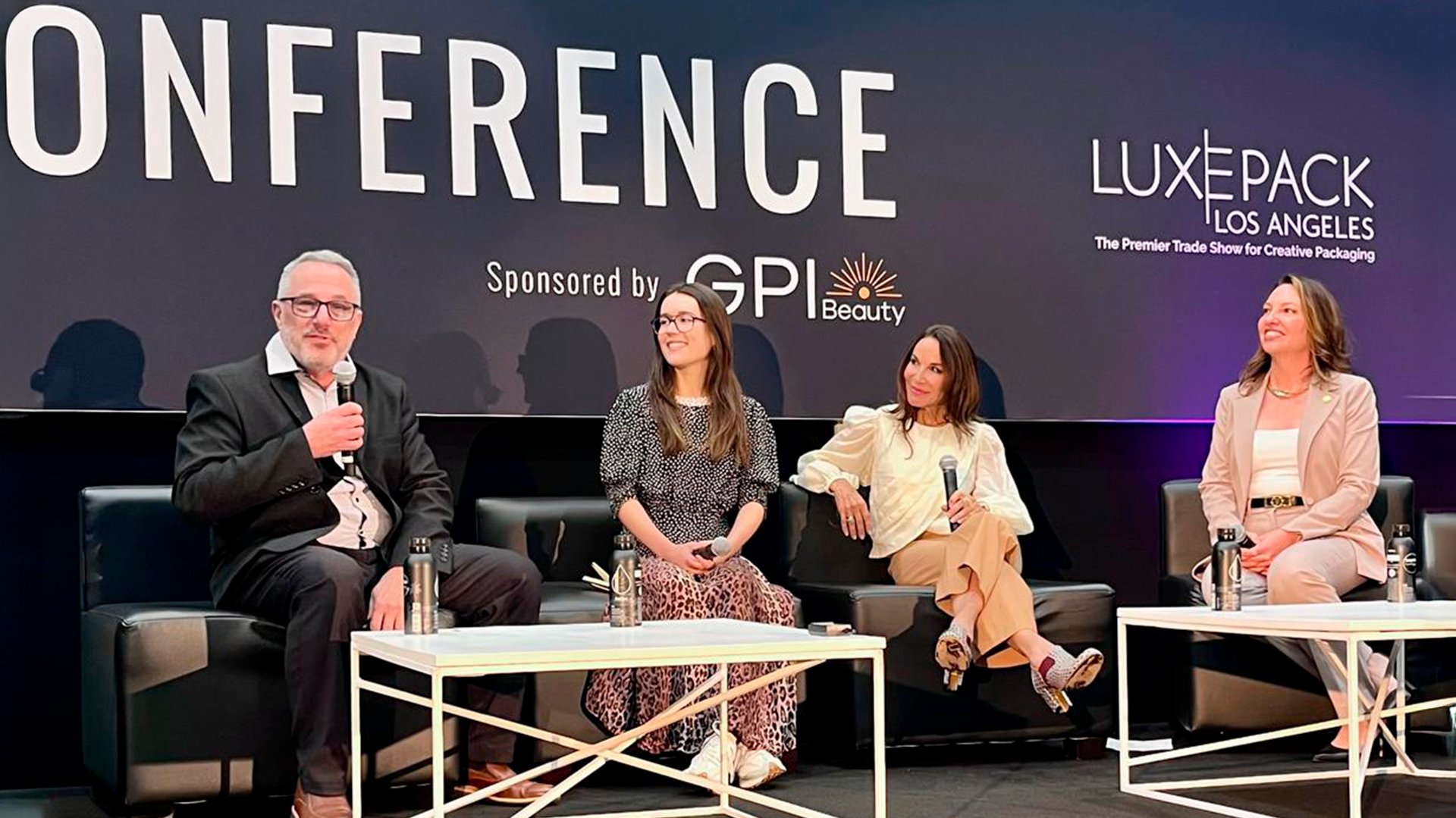
By Rick Ponte, Vice President of Project Engineering, APC Packaging
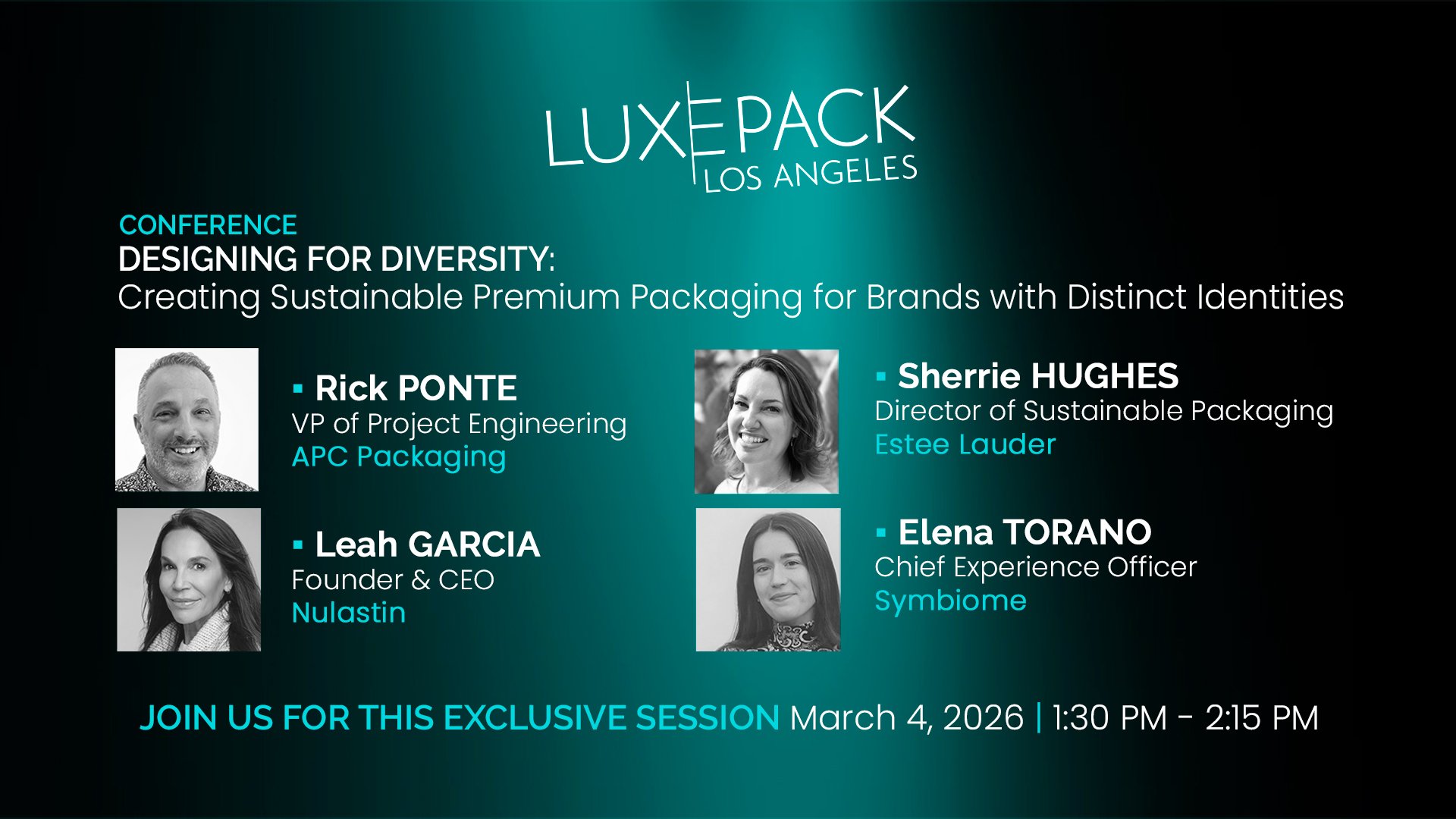
It was an honor to join our partners at Estēe Lauder, NULASTIN, and Symbiome on March 4th at LUXEPACK Los Angeles to discuss a topic that continues to shape the future of our industry: designing sustainable premium packaging for brands with distinct identities.
The conversation reinforced something we see every day at APC Packaging, brands are defined by far more than the products they sell. They are defined by what they stand for: their values, their sustainability commitments, their cultural relevance, and the experiences they create. Packaging sits at the center of that intersection.
For premium brands, packaging did far more than protect a product. It communicated story, reinforced identity, and increasingly, demonstrated environmental responsibility. Designing for diversity meant recognizing that no two brands were alike, and neither were the consumers they served.
The central challenge we discussed was clear: How do we create sustainable premium packaging solutions that honor unique brand identities without compromising performance, luxury, or environmental responsibility?
The Evolving Meaning of Premium
Historically, “premium” packaging meant weight, gloss, metallic finishes, rigid structures, and elaborate embellishments. During our panel, we reflected on how dramatically that definition has evolved.
Modern premium had become:
- Intentional
- Sustainable
- Experiential
- Brand-authentic
- Globally conscious
Today’s luxury consumers are informed and mindful. They expect elevated aesthetics, but they also expect accountability. That shift has required packaging partners to rethink materials, structural engineering, and design strategy from the earliest stages of development.
Premium is no longer excess. It is refinement with purpose.
Designing Around Brand DNA
One of the key themes of the discussion was brand immersion. Every brand has its own DNA. Some embrace minimalism and clean formulations. Others celebrate bold expression or heritage craftsmanship. Some are driven by clinical performance, others by sensorial indulgence.
We emphasized that successful packaging development begins with understanding:
- What does the brand stand for?
- Who is the core consumer?
- What should the unboxing experience evoke?
- How does sustainability factor into the brand’s story?
Packaging needed to visually and tactically reinforce those answers.
For example:
- A clean beauty brand might call for understated elegance using FSC-certified paperboard and soft-touch finishes.
- A high-performance skincare line might require precision-engineered airless systems with a clinical aesthetic.
- A luxury fragrance house might demand sculptural rigid boxes with layered textures and refined embellishments.
In each case, the solution had to feel native to the brand, never templated.
Structural Innovation with Purpose
From an engineering perspective, structural design emerged as one of the most powerful tools for differentiation while advancing sustainability goals.
We discussed approaches such as:
- Mono-material constructions to improve recyclability
- Refill-ready components that extended product life cycles
- Light weighting without sacrificing durability
- Reducing secondary packaging through smarter engineering
- Modular systems adaptable across SKUs
Thoughtful structural design reduced environmental impact while improving supply chain efficiency and cost optimization, a balance global brands increasingly required.
Engineering excellence and sustainability were not competing priorities. When approached strategically, they strengthened one another.
Sustainability Without Compromising Aesthetics
Another important point we explored was the misconception that sustainability limits design potential. In reality, advancements in materials and processes have expanded what is possible.
Today’s solutions included:
- High-quality recycled paperboard with premium finishes
- PCR and bio-based resins
- Water-based inks and coatings
- Recyclable or compostable decorative elements
- Responsible foil and embossing techniques
The consensus was clear: sustainability must be integrated from the beginning. It could not be layered onto a finished concept. When embedded early in the creative and engineering strategy, sustainable packaging enhanced brand equity and reinforced consumer trust.
Cultural Sensitivity and Global Scalability
For brands operating globally, designing for diversity also meant navigating regulatory complexity and cultural nuance.
We addressed considerations such as:
- Regional sustainability regulations
- Differences in recycling infrastructure
- Cultural symbolism in color and design
- Localization of language and claims
- Market-specific consumer behavior
Packaging that performed effectively in North America might require material adjustments to meet European recyclability standards. A color palette resonating in one region could carry unintended meaning in another.
Scalable packaging required consistency with adaptability, maintaining brand recognition while respecting regional differences.
The Power of the Unboxing Experience
In today’s digital landscape, packaging has become content. The unboxing moment has evolved into an extension of brand storytelling, particularly within beauty and wellness.
We discussed how impactful experiences could be achieved through:
- Intentional layered reveals
- Tactile contrasts
- Strategically placed interior messaging
- Sustainable inserts replacing plastic components
- Refined opening mechanisms
Importantly, we noted that impact did not require excess. Emotional resonance could be achieved through intelligent engineering rather than unnecessary materials.
Refinement over redundancy.
The Importance of Cross-Functional Collaboration
Creating sustainable premium packaging for diverse brands required early collaboration across disciplines:
- Industrial design
- Sustainability and materials science
- Supply chain strategy
- Regulatory expertise
- Brand marketing
When alignment occurred early in development, packaging became a strategic asset rather than a final execution step.
The future of premium packaging depended on integrated thinking, where creativity, engineering precision, and environmental responsibility worked seamlessly together.
Future-Proofing Through Flexibility
As consumer expectations continue to evolve, flexibility remains critical. Packaging systems designed to support:
- Refill programs
- Component separation for recycling
- Adaptable decoration techniques
- Easy SKU expansion
…provided long-term value beyond a single launch cycle.
Designing with flexibility ensured packaging could evolve alongside the brand without requiring complete redevelopment.
Designing with Intention
The overarching takeaway from our discussion at LUXEPACK was that designing for diversity is not about creating endless variations. It is about delivering intentional solutions tailored to each brand’s identity, audience, and sustainability goals.
The most impactful premium packaging:
- Authentically reflected the brand
- Demonstrated environmental responsibility
- Delivered a memorable consumer experience
- Performed efficiently across global markets
- Balanced innovation with practicality
In a marketplace where differentiation is essential and sustainability is non-negotiable, thoughtful packaging design has become a powerful competitive advantage.
It was a privilege to explore these themes alongside industry leaders. Conversations like these continue to move our industry forward, and reinforce the importance of engineering packaging solutions that are distinctive, purposeful, and built for a more sustainable future.
Contact APC Packaging to start your next packaging project for your unique identity.
👉 Let’s start the conversation.