---
title: Engineering the Right Skincare Pump
description: Selecting a skincare pump requires more than choosing a component. Explore five engineering factors that influence compatibility, dispensing, filling, sustainability, cost, and launch success. ✨
image: https://techcenter.apcpackaging.com/hubfs/BLOG-SEP-26-PUMPS.jpg
---
[ ](https://apcpackaging.com/)
[](https://apcpackaging.com)
[954-978-4567](tel:954-978-4567)
- [Default HubSpot Blog](https://techcenter.apcpackaging.com)
# Packaging Blog
###### [Back to the Index](https://techcenter.apcpackaging.com)
#### Engineering the Right Skincare Pump
---
Posted by [APC Packaging](https://techcenter.apcpackaging.com/author/apc-packaging)
---
Five Factors That Can Make or Break Package Performance
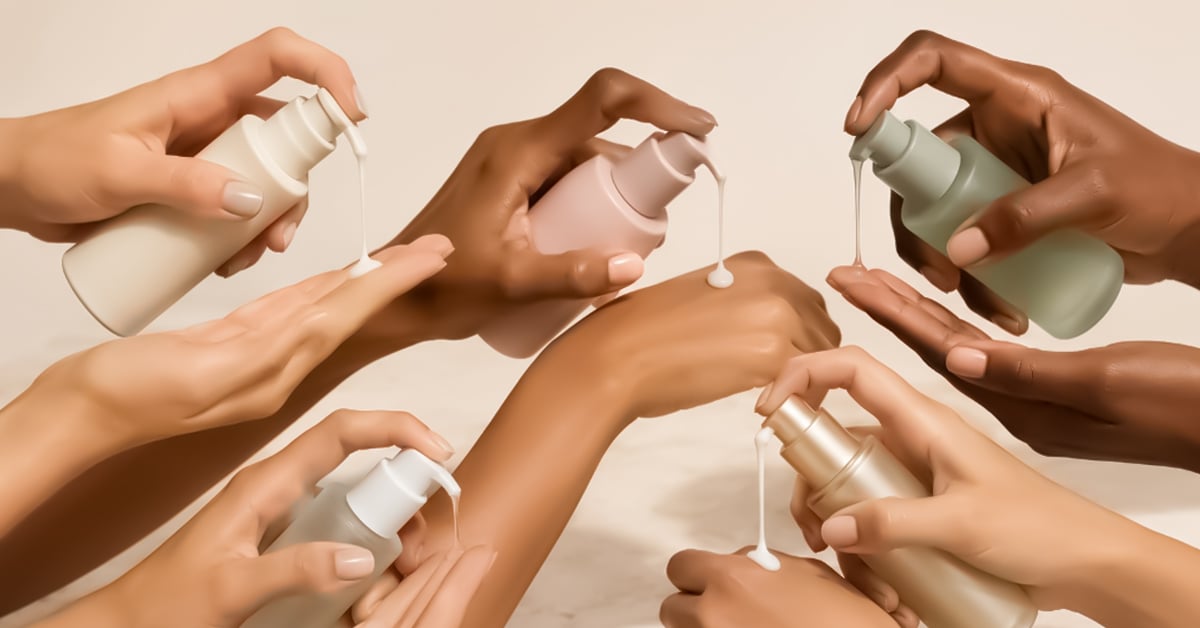
From an engineering perspective, a skincare pump should never be evaluated as an isolated component. It is one part of a complete dispensing system, one that must work with the formula, bottle, filling process, decoration, distribution environment, and the way the consumer will ultimately use the product.
When these elements are considered separately or too late in development, a package that looks ideal in a rendering may encounter problems during filling, testing, shipping, or use. Leakage, inconsistent output, difficult priming, clogging, poor evacuation, and component incompatibility can all affect the launch timeline and the consumer’s perception of the brand.
The best results come from selecting and validating the entire dispensing system early. Here are five of the most important engineering considerations when developing a pump package for skincare.
### 1. Formula and Pump Compatibility
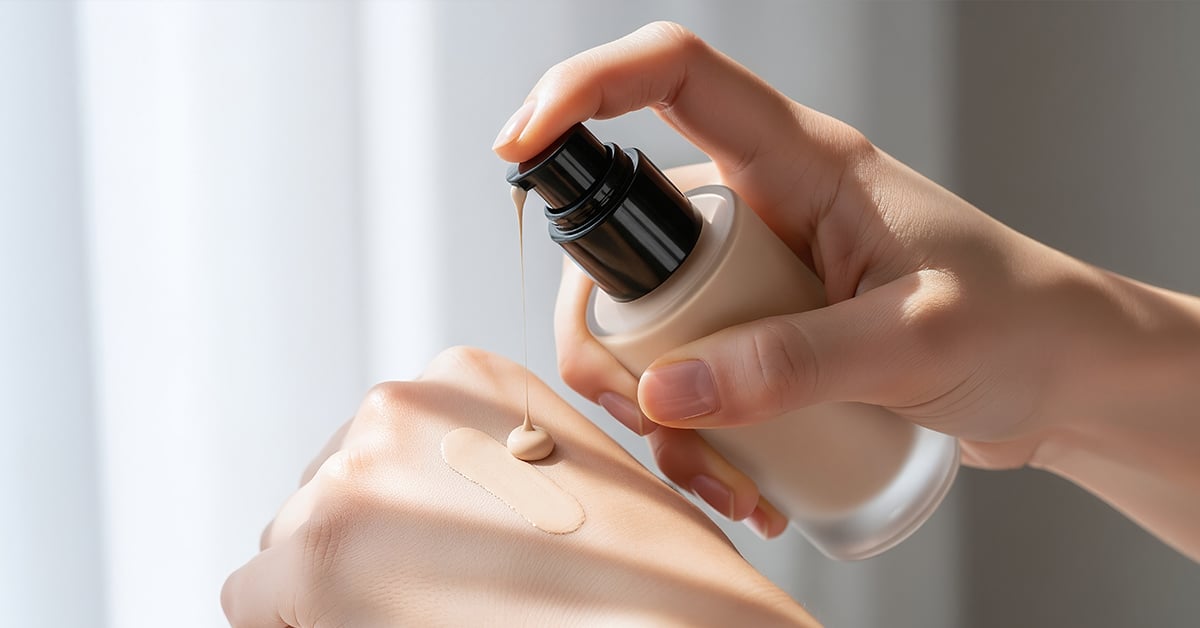
Every formulation behaves differently inside a dispensing system. Viscosity is an important starting point, but it is not the only consideration. Oils, alcohols, acids, active ingredients, suspended particles, fragrances, and other formulation characteristics may influence pump function or interact with package materials.
A pump that performs well with one lotion may not produce the same result with a high-viscosity cream, lightweight serum, facial oil, or exfoliating formula. The formula can affect how quickly the pump primes, how smoothly the product travels through the flow path, and whether the system continues to perform consistently over time.
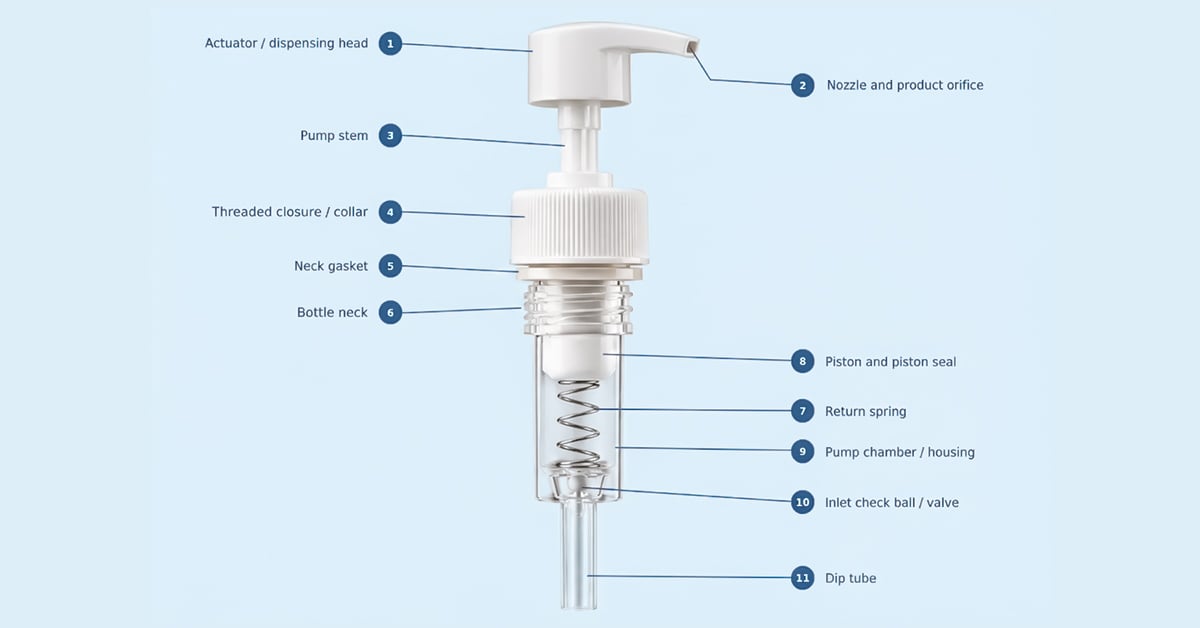
Material compatibility is equally important. The formula may come into contact with several materials throughout the package, including the bottle, piston, gasket, dip tube, actuator, and internal pump components. Compatibility testing helps identify changes such as swelling, softening, stress cracking, discoloration, loss of seal integrity, or other performance concerns.
For this reason, testing should be conducted with the actual formula in the complete intended package. Water or a substitute formula may be useful during early screening, but it cannot fully validate production performance.
### 2.Dispensing Performance and Consumer Experience
The pump is one of the few package components the consumer actively engages with during every use. Its performance directly influences whether the product feels precise, dependable, convenient, and premium.
Engineering evaluation should include:
- Dose output and accuracy
- Priming speed
- Consistency from the first dose to the last
- Actuation force and ergonomics
- Leakage resistance
- Clogging or product buildup
- Dripping or stringing after dispensing
- Product evacuation
- Locking and travel performance
The ideal output depends on the application. An eye serum may require a smaller, highly controlled dose, while a moisturizer or body treatment may need a larger output. Too much product can create waste and inconvenience; too little can require repeated actuation and diminish the user experience.
Evacuation is especially important because consumers judge the package by how much usable product they can access. Airless systems can offer strong evacuation and help limit formula exposure to air, but the complete system must still be matched to the formula and validated under expected conditions.
A premium formula can quickly feel less premium if the pump sputters, leaks, clogs, or delivers an inconsistent dose. Dispensing performance is therefore not only an engineering requirement, it is part of the brand experience.
### 3.Package and Filling-Line Integration
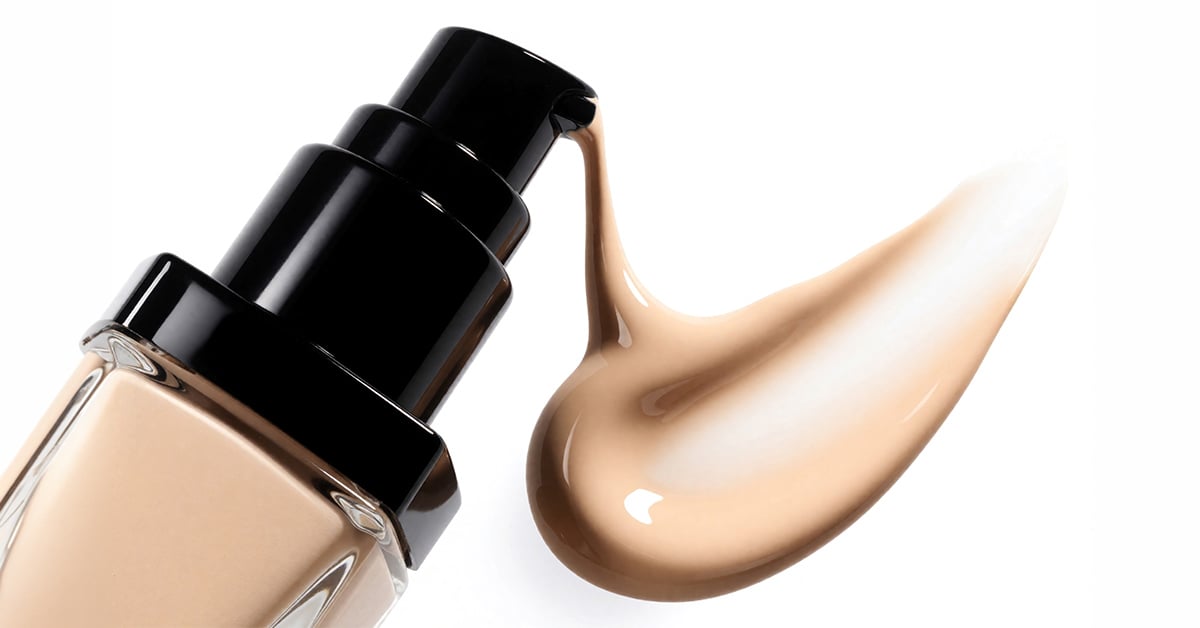
A well-performing pump must also integrate correctly with the rest of the package and the customer’s filling operation. The bottle, pump, neck finish, dip tube, closure system, torque, decoration, filling process, and shipping configuration must function together.
Even small dimensional or process variations can create significant problems. An incorrect dip-tube length may limit evacuation or interfere with assembly. Improper application torque can contribute to leakage, back-off, or component damage. Bottle tolerances and neck-finish dimensions can affect sealing. Filling temperature, fill speed, headspace, and product aeration may also influence package performance.
Decoration should be reviewed as part of the system as well. Coatings, metallization, labels, sleeves, and other finishes can affect component fit, dimensional tolerances, scuff resistance, and performance on the filling line.
Many of these issues do not appear when individual components are reviewed at a desk. They emerge during line trials, accelerated testing, drop testing, shipping simulation, or temperature cycling. Early coordination among the brand, formulator, filler, packaging supplier, decorator, and testing partners can help surface these risks before full production.
### 4.Balancing Sustainability and Performance
Beauty brands are increasingly evaluating mono-material, recyclable, PCR, refillable, lightweight, and metal-free packaging options. These are meaningful development priorities, but the strongest sustainability claim is not automatically the right solution for every formula, filling process, distribution channel, or consumer use case.
For example, eliminating a metal spring may improve the material profile of a pump, while an all-PP construction may support a mono-material strategy. PCR can reduce the use of virgin resin, and refillable systems can allow durable components to be reused. Each approach, however, still needs to meet the program’s functional, aesthetic, regulatory, and commercial requirements.
Engineers must evaluate whether a sustainability feature changes dispensing performance, component durability, appearance, color consistency, decoration options, line efficiency, or compatibility with the formula. They should also consider the full package, not just a single component, and communicate the sustainability story accurately.
The goal is to find the best balance among environmental objectives, package performance, consumer experience, brand aesthetics, manufacturability, and cost.
### 5.Cost, Timing, and Supply-Chain Risk
Although a pump may appear to be one component on a bill of materials, it contains multiple precision parts that must be molded, assembled, and tested to tight tolerances. The finished package may also involve separate bottle, pump, decoration, assembly, and secondary-packaging suppliers.
This complexity creates potential risk in tooling, quality, lead times, minimum order quantities, supplier coordination, and transportation. A late change to the formula, actuator, neck finish, decoration, or filling method can trigger new samples, testing, tooling modifications, or production delays.
Unit price is therefore only one part of package cost. The total program cost can also include testing, line adjustments, rejects, leakage, rework, freight, excess inventory, missed launch dates, and damage to the consumer experience.
Early engineering review helps teams compare options more realistically. A proven stock-mold solution may reduce development time and tooling investment, while a custom solution may deliver a more differentiated consumer experience. The right choice depends on the brand’s priorities, forecast, timeline, technical requirements, and acceptable level of risk.
### The Solution Is the Complete Dispensing System
Selecting a skincare pump should not begin and end with appearance, output, or price. The correct solution is the one that has been evaluated as part of the complete package and validated against the actual formula, filling conditions, distribution environment, sustainability objectives, and consumer expectations.
APC Packaging works with beauty and skincare brands across primary packaging, pumps and dispensing systems, decoration, engineering, material selection, sustainable packaging, private molds, and supply-chain coordination. Through APC’s partnership with [Garrett Hewitt International](http://www.garretthewitt.com), customers can also explore complementary secondary packaging and accessories as part of a more integrated development process.
By bringing these elements together earlier, development teams can identify potential issues before they become production or launch problems, reduce program risk, improve package performance, support faster commercialization, and create a better consumer experience.
---
Partner with APC Packaging
Developing a new skincare package or evaluating a pump for an existing formula? [Schedule a consultation with the APC Packaging team](https://apcpackaging.com/contact/) to discuss your formula, performance requirements, sustainability goals, timeline, and brand vision.
👉 [Let’s start the conversation.](https://apcpackaging.com/contact/)
- [Tweet](https://twitter.com/share)
###### 
###### Welcome to the packaging BLOG
Think of this place as a useful guide to anyone, from newcomers to the most experienced professionals, in the packaging industry. Subscribe to the Packaging Blog on LinkedIn.
[](https://cta-redirect.hubspot.com/cta/redirect/4416495/7eb8f591-4e63-44aa-9da6-cadc7fb93d9e)
### Recent Posts
[](https://apcpackaging.com/) [954-978-4567](tel:954-978-4567) [info@apcpackaging.com](mailto:info@apcpackaging.com)
1850 West McNab Road
Fort Lauderdale, FL 33309
[](https://www.facebook.com/APCPACKAGING) [](https://www.linkedin.com/company/apc-packaging/) [](https://www.instagram.com/apcpackaging/)[](https://www.youtube.com/channel/UCxuws8tKZvuw6L_mNngaLSA)
In-Stock
- [Airless](https://apcpackaging.com/product-category/stock/airless-stock/)
- [Bottles](https://apcpackaging.com/product-category/stock/bottle-stock/)
- [Jars](https://apcpackaging.com/product-category/stock/jars-stock/)
- [Droppers](https://apcpackaging.com/product-category/stock/droppers-stock/)
- [Closures](https://apcpackaging.com/product-category/stock/closures-stock/)
- [Tubes](https://apcpackaging.com/product-category/stock/tubes-stock/)
Customized
- [Airless](https://apcpackaging.com/product-category/custom/airless-custom/)
- [Bottles](https://apcpackaging.com/product-category/custom/bottle-custom/)
- [Jars](https://apcpackaging.com/product-category/custom/jar-custom/)
- [Droppers](https://apcpackaging.com/product-category/custom/dropper-custom/)
- [Closures](https://apcpackaging.com/product-category/custom/closures-custom/)
- [Tottles](https://apcpackaging.com/product-category/custom/tottles/)
- [Tubes](https://apcpackaging.com/product-category/custom/tubes-custom/)
- [Sustainable](https://apcpackaging.com/product-category/custom/sustainable/)
- [Color Cosmetics](https://apcpackaging.com/product-category/custom/color-cosmetics-custom/)
Custom Services
- [Materials](https://apcpackaging.com/custom-services/materials/)
- [Decoration](https://apcpackaging.com/custom-services/finishing/)
- [Private Molds](https://apcpackaging.com/custom-services/private-molds/)
Connect
- [Contact](https://apcpackaging.com/contact/)
- [Subscribe](https://apcpackaging.com/newsletter-subscription/)
- [Join our team](https://apcpackaging.com/jobs/)
- [News & Events](https://apcpackaging.com/news/)
- [Packaging Blog](https://techcenter.apcpackaging.com/)
- [FAQ](https://apcpackaging.com/faq/)
Sustainability
- [Sustainable Packaging](https://apcpackaging.com/sustainability/)
- [New Innovations](https://apcpackaging.com/innovations/)
- [Sustainable Education](https://apcpackaging.com/sustainable-education/)
- [Refillable Packaging](https://apcpackaging.com/refillable-packaging/)
- [Mono-Material Packaging](https://apcpackaging.com/mono-material-packaging/)
The APC Difference
- [About Us](https://apcpackaging.com/about-us/)
- [All Points Covered](https://apcpackaging.com/all-points-covered/)
- [Awards](https://apcpackaging.com/awards/)
- [Before & After](https://apcpackaging.com/before-after/)
- [Lookbook](https://apcpackaging.com/lookbook/)
- [Portfolio](https://apcpackaging.com/showcase/)
- [Sales Process](https://apcpackaging.com/sales-process/)
- [Testimonials](https://apcpackaging.com/testimonials/)
- [Video Gallery](https://apcpackaging.com/video-gallery/)

© 2024 APC Packaging. All rights reserved. [Terms & Conditions](https://apcpackaging.com/terms-and-conditions/) [Privacy Policy](https://apcpackaging.com/privacy-policy/)
```json
{
"@context" : "https://schema.org",
"@type" : "BlogPosting",
"author" : {
"@type" : "Person",
"name" : "APC Packaging",
"url" : "https://techcenter.apcpackaging.com/author/apc-packaging"
},
"dateModified" : "2026-09-03T22:52:35.731Z",
"datePublished" : "2026-09-03T22:52:35.000Z",
"headline" : "Engineering the Right Skincare Pump",
"image" : [ "https://techcenter.apcpackaging.com/hubfs/BLOG-SEP-26-PUMPS.jpg" ],
"mainEntityOfPage" : {
"@id" : "https://techcenter.apcpackaging.com/engineering-the-right-skincare-pump",
"@type" : "WebPage"
},
"publisher" : {
"@type" : "Organization",
"logo" : {
"@type" : "ImageObject",
"url" : "https://techcenter.apcpackaging.com/hubfs/APC%20Logo-2.jpg"
},
"name" : "APC PACKAGING"
}
}
```